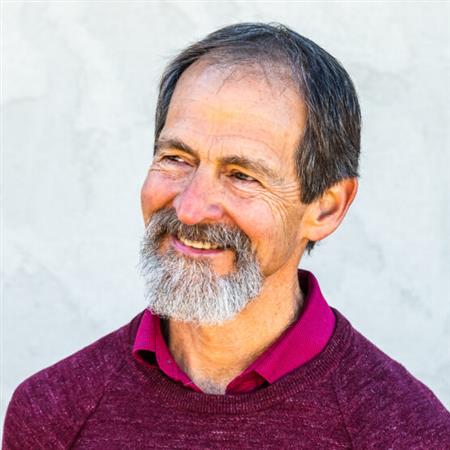
For our June 14 in-person meeting, Dr. Scott Shannon gave us an interesting, fact-filled, and positive introduction to the current state of research in and use of psychedelics (including LSD and psilocybin), empathogens (including MDMA), and dissociative agents (including ketamine) in treating mental-health issues. Dr. Shannon has been in Colorado, mostly the Fort Collins area, for some 30 years, currently at the Wholeness Center (www.wholeness.com). He and co-investigators have spent the last seven years on a soon-to-be-published study on the use of MDMA in treatment of PTSD. The next stage in the progress of this study will be to obtain FDA approval for widespread use of MDMA in PTSD treatment.
Before talking about the specifics of current research and trials, Dr. Shannon pointed out that the natural psychedelics (e.g., psilocybin) have been around for thousands of years, traces having been found in archeological sites in South America and Mexico. Thus, he says that the current effort is a new model using old tools. We have been suffering a crisis in mental health with rates of suicide and treatment-resistant depression significantly increased over the last few years. He wanted to show that these chemicals are likely to have a much larger scope in the area of mental health than more traditional psychiatric medications. These psychedelics may be used in a treatment program that brings together psychotherapy and psychiatric medicines in ways to add to each other, wherein the patient develops a relationship with the psychiatrist/psychologist such that the medications lead to increased neuroplasticity and, thus, greater ability to learn and change under the guidance of the health-care professional. In many cases, the patient will be stuck in a mental place where he can’t get out and the combination of neuroplasticity and professional guidance will help the patient get unstuck.
In a double-blind experiment involving some 20 patients, those patients treated with LSD knew immediately that they got the dose, whereas those who got the placebo experienced no effect and the subjective mental effects were dramatically greater with LSD than with the placebo. There were similar psychological/mental effects in numerous trials before 1970. However, passage of the Controlled Substances Act in that year, by classifying all psychedelics as Schedule 1 controlled substances, put a stop to all research in the United States. There is some current effort in Congress to make research easier. This is especially important given that psychotherapy is commonly ineffective and psychopharmacology, using currently accepted drugs, is either ineffective or requires continued on-going use, whereas the psychedelics commonly provide improved ability to address and change previously intractable mental issues.
Looking at individual psychedelic chemicals and specific experiments:
Psilocybin (magic mushrooms) is chemically very close to serotonin and acts to alter the neurons ability to learn new methods to address the issues while SSRI medications like Prozac only help us to tolerate distress. In one test, after only two doses, depression severity was dramatically reduced and remained low for at least six months after the treatment, whereas the typical meds simply help to manage the misery and must be taken every day. In another experiment with 30 patients, the intensity of the mystical experience associated with the drug was predictive of the positive effect on mental state, with the effect lasting at least 14 months. In dealing with end-of-life anxieties, whether cancer, ALS, or some other terminal condition, high-dose psilocybin produced dramatic decreases in depressed mood, anxiety and death anxiety and with increased optimism and quality of life.
MDMA, an off-patent amphetamine-related drug created by Merck for other purposes in 1914, is an empathogen: it increases release of serotonin, norepinephrine, and dopamine and increases empathy and closeness to others with little perceived loss of control. A survey of 20 psychiatrists with experience with MDMA showed high positive effect to enhance therapy. A test with 90 PTSD sufferers showed that MDMA-assisted therapy was much more effective than placebo with therapy.
Ketamine, in numerous tests, has a remarkable effect on depression with response in a few hours to a few days and almost immediate reduction in suicidal ideation. It is a generic drug and, so, very cheap, and has numerous modes of delivery. A six-week program for frontline healthcare workers and first responders (three group medicine sessions and 12 hours of therapy) produced powerful results.
With respect to potential drug harm, the psychedelics showed low harm to users and virtually no harm to those around the users, compared with the dramatic negative impact on both users and others by alcohol, heroin, crack cocaine, and tobacco, among others. Across 110 experimental subjects with a range of doses, there were no persistent perceptual issues, psychosis, or drug abuse. Finally, psilocybin creates a less rigid and more open connections across networks in the brain.
Questions:
Are the new mental pathways opened by these therapies permanent? That is uncertain, but we are gaining insight into what is happening. The patients see things in a new way and become more joyful. All this is assisted by the simultaneous psychotherapy sessions.
What about schizophrenia? This has been excluded from most studies. In schizophrenia, the brain is disorganized and it is uncertain if it will return after one of these treatments.
How will big Pharma fit into this? The current sponsor of many of these studies is a non-profit, a rare time that a new therapy has been pushed by a non-profit. Since big Pharma tries to patent a therapy and then see it used many times, it is not clear how big Pharma could make a profit with these therapies.
In the 50 years since the Controlled Substances Act was passed, what has happened? In that time, alcohol has caused more damage than all of the other possibilities combined. All of these potential therapies have risks but the potential benefits are huge. We simply need sensible regulations for safety.
What is the cost for these therapies and what about insurance? The Ketamine therapy is around $400 to $900 per session; MDM, $10,000 to $15,00 per session; psilocybin, $1500 to $2000 per session. It is unclear how insurance will address this issue.
What about the possibility of addiction? So far, it appears that psychedelics are anti-addictive.
Dr. Shannon closed with the comment that they are planning a research study on generalized anxiety disorder. They are looking for candidates but candidates must have a diagnosis of generalized anxiety disorder. The study would be of no cost to any participants.